As a result of the pandemic of 2020 I, like many others spent many days at home for close to an entire year. While I was home I waited for the day when some announcement would be made that the quarantine had worked, but that day never really came. Given the circumstances it was difficult for me to foresee how to complete the internship requirement for my Master’s degree. I reached out to several promising locations during the height of the quarantines or lockdowns. Either there was no reply or they informed me that because they were either closing until the mandates were removed or going to be working remotely as much as possible they unfortunately had no immediate need or ability to provide work for an intern. As soon the restrictions were dropped or removed I contacted people again. Only one location, The Cleveland History Center of the Western Reserve Historical Society, replied in the affirmative that they would possibly be able accommodate interns.
With my former experience as a volunteer at another museum-like location I had some idea and expectations of what I might experience while interning at the Cleveland History Center. Eric Rivet, the Curator, described what the History Center stood for and how diverse and intriguing the materials and artifacts contained within the collections were at the History Center. With Eric and the other summer intern Dustin, I explored around the History Center’s two mansions, entrance hall and library. I learned that many of its collections have been lying idle due to either lack of interest, display space or time and money to create an exhibit.
Once again the pandemic would rear its head to affect how Dustin and I would be working and this change came in the loss of an assistant curator who was organizing the collections paperwork and ascension materials from donors of the past few decades. During our first few weeks Dustin and I began checking an inventory for completion. Working on the Shaker religious group inventory sheets, we saw that something was missing from the printed lists. Searching for the items based on ascension numbers from the list, it became apparent how many items were completely excluded. Eric agreed that we were correct and multiple items were missing. Dustin and I then began entering an entirely new inventory list within the History Centers database. I came to experience the feeling of joy, very similar to opening birthday presents as a young child, each time we moved from one box to another. Although some boxes were not so joyful, one such box was full of bundles or flax or hair the Shaker’s used to create yarn or thread for their sewing. It was fascinating to remove a piece of clothing and realize it was sewn by hand and not in a factory but looked as if it was recently purchased from Kohls. I also discovered that even in the 1800’s children disliked working on ‘homework’ as was evident from the sewing and needlepoint samples that filled several of the collection boxes. On one sample I showed Dustin included several extra doodles in needlepoint that did not appear to follow the teaching and practice methods of the other samples.
Shaker inventory was not our only task during our time at the History Center. Another was to create an art gallery style exhibit of varied artwork and posters that never before had been displayed to the visiting public. Dustin and I were included in the organization, display, and hanging of the selected materials in the Norton gallery and Gallery II. The Norton gallery was focused on artwork from the History Center’s collections. Dustin and I cataloged the artwork on a database file for use when the materials returned to collection storage. Many pieces did not contain information directly on their surface that informed about the painter, what the subject was, or who had donated the painting. Therefore we had to use the collections database to search and locate the paintings artist and previous storage location. Norton Gallery was hung using a gallery-style technique but when it came to installing the propaganda posters they were going to be hung in a single long line across the wall. When we finally got to hanging the posters upon the wall Kevin, the installation expert, explained in most galleries it is usual practice to hang a piece at ‘60 at center,’ which means that all the art pieces upon the wall are center at exactly 60 inches above the floor. Kevin explained that ‘60 above center’ was utilized because most adult museum patrons, at one time usually men, were around 5’10” to 6’ in height and this was the perfect height to look over most of a piece of artwork without having to strain their neck to high up or bend far down to see the bottom. Kevin showed different ways to hang any kind of painting from the French cleat, d-rings, and wire hangers.
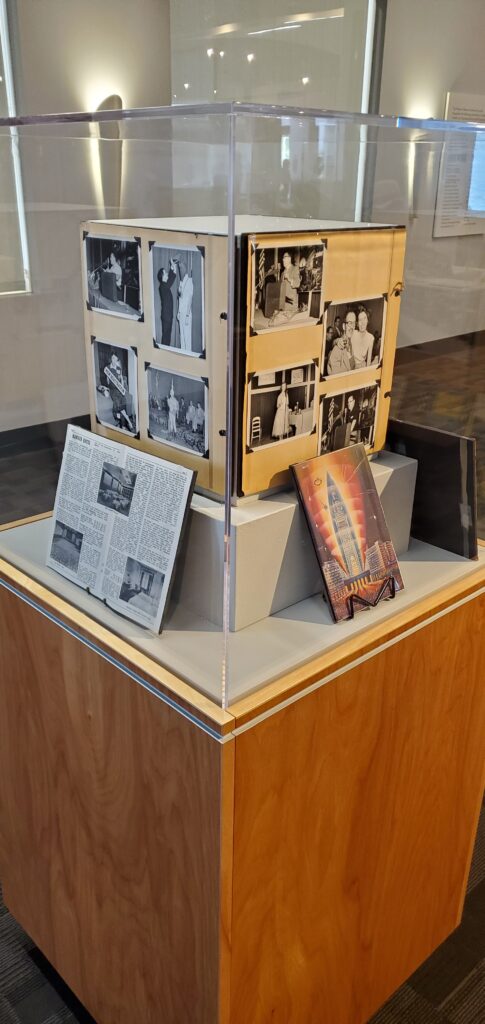
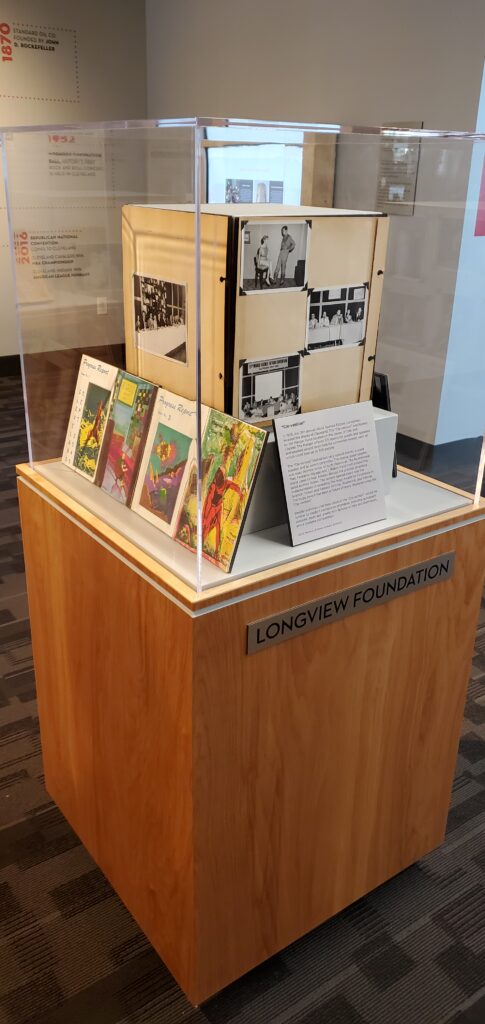
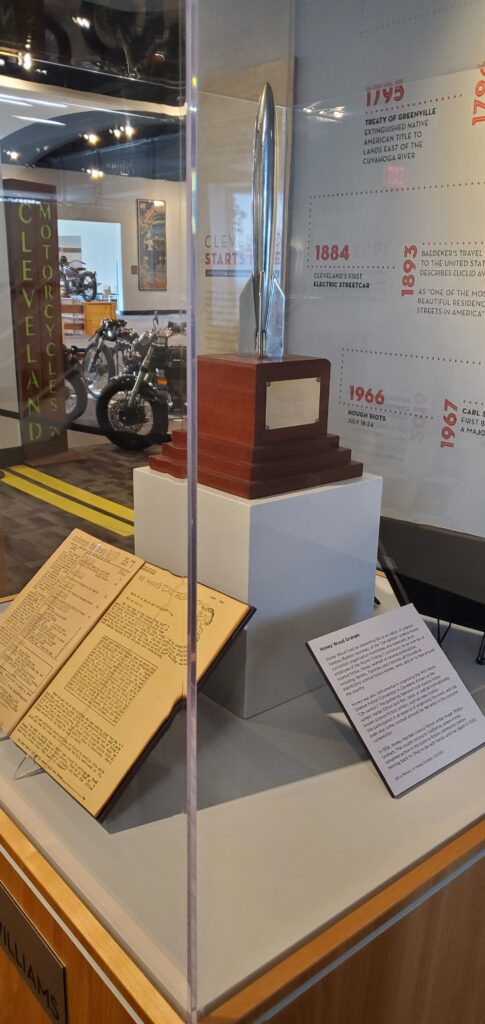
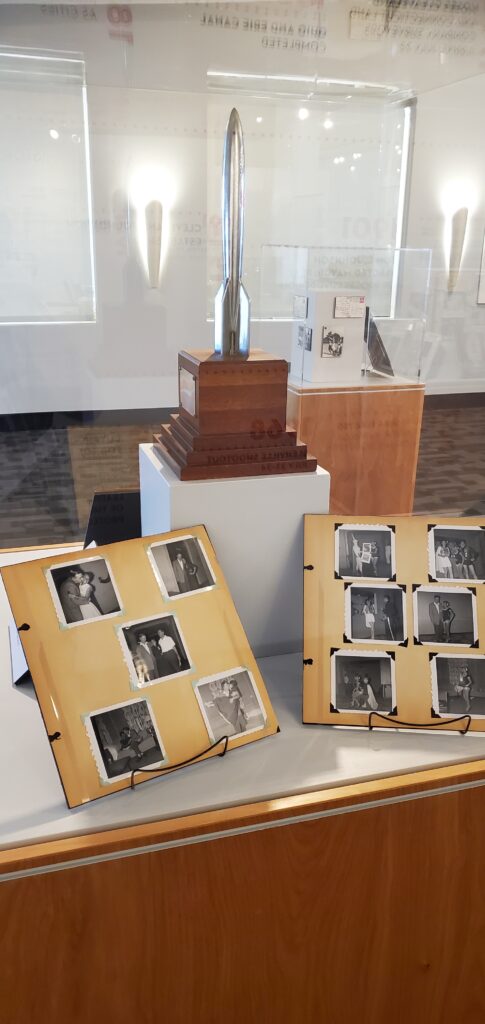
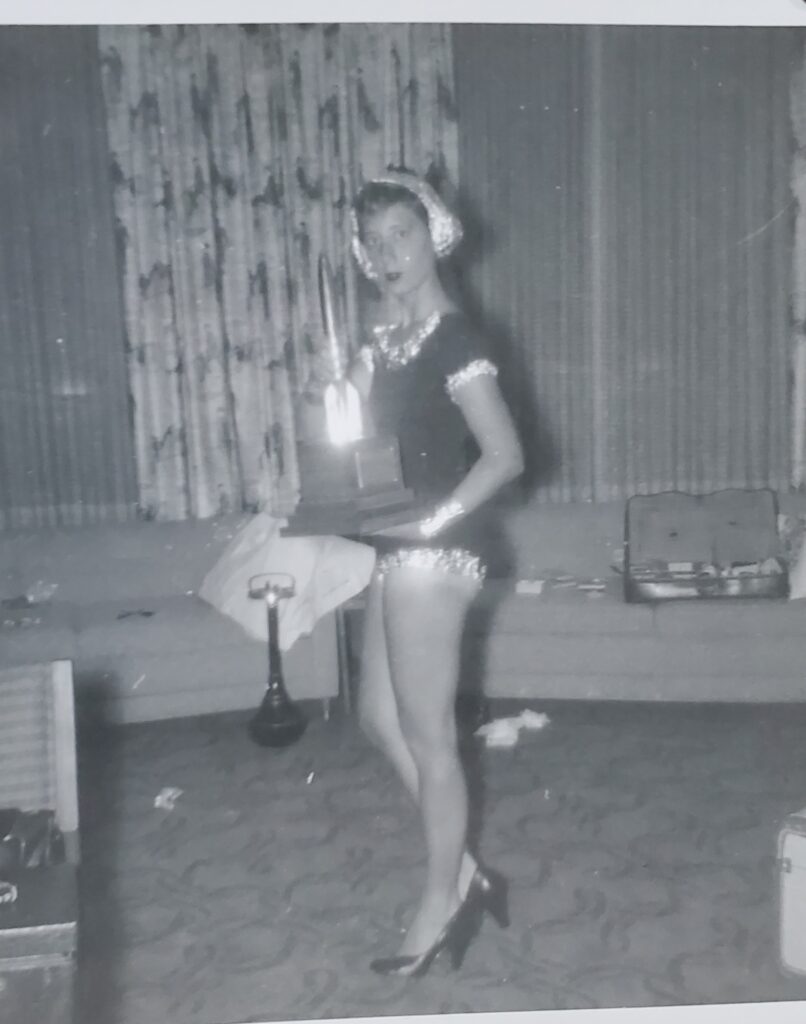
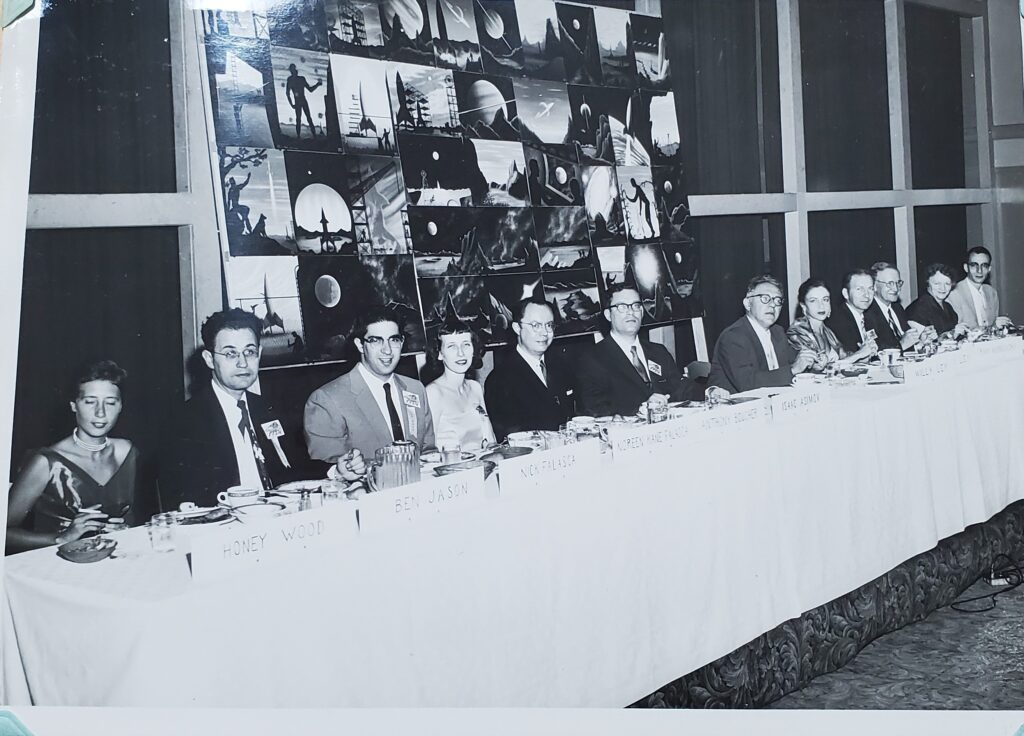
The Cleveland History Center has also been expanding its reach to other areas of Cleveland. Kevin and I helped put finishing touches on the Italian American Museum of Cleveland in Little Italy. Eric informed Dustin and me that we were going to be in charge of the creation, development and implementation of a tiny exhibit of our own within the ‘community cases’ of the History Center donated by various companies or families within the Cleveland community. We spent a work day exploring and gathering various thoughts and ideas from the artifacts and materials. We saw all kinds of interesting materials from early film and television cameras, entire 19th century copper and silver kitchenware, to nearly a hundred different types of inkwells. Dustin focused on Euclid Beach along with a onetime summertime camp known as ‘Camp Cleveland’. Eric showed us some newly donated materials which surround Honey Wood/Graham and her time developing the ‘Cle-vention’ or the 13th annual World’s Science Fiction and Fantasy Convention. This convention is when the prototypes for the Hugo Award for science fiction and fantasy writing and editing were developed and awarded to the winners. I was one of the first people from the museum to dig through and see what types of materials from artwork, to autographed drawings and a large scrapbook of pictures and pamphlets were donated. As an avid fan of both Science Fiction and Fantasy, it was an absolutely breathtaking experience to look at the artwork, pictures and read the pamphlets regarding the ‘Cle-vention’. I was able to contact the person who donated the materials on behalf of Honey Wood/Graham in order to gain a more specific and better understanding of the collection. At Cleveland State the subject matter of gender studies influenced my thoughts about how I could display the “Cle-vention” in the scope of feminist history.
Over the course of both my time at the Cleveland History Center as well as my experience during the pandemic and the historical and social issues and problems it has revealed I changed drastically from who I was not more than one year before in 2019. However, since all I and many others experienced during the pandemic from health inequalities, social inequalities and racial biases and injustices it changed how I walk into many everyday scenarios. I have become much more aware of missing or excluded histories or practices, and I understand more that other’s’ experiences in both life and within work environments will not be the same as how I or others like me have experienced those same subjects or viewpoints. This past year plus has given me more than I ever truly thought I would have to think or regard when it came to my life and future in the field I was pursuing. I hope to continue to strive to be someone who can do and be better in my chosen career field but also wish to strive to be better in life in general. I love studying history but my exposure both in my internship and during the pandemic opened my mind to how the world really works, and now I see how truly understanding that history and what is missing in the story is just as important as what is plain to see.